If the first few minutes of your middle school ELA class feel like chaos, reading bell ringers can help create a predictable routine while giving students consistent reading comprehension practice.
A good reading bell ringer doesn’t need to take half the class period. In fact, I prefer short reading passages that students can read and respond to in about 5–10 minutes.
The goal isn’t to replace authentic reading, whole-class texts, independent reading, or your regular ELA instruction. Instead, reading bell ringers give students frequent opportunities to practice important comprehension skills while giving you a consistent way to begin class.
After teaching middle school ELA for years, I found that the best bell ringers were the ones students could eventually begin without waiting for me to explain what to do. That predictability matters in middle school.
What is a reading bell ringer?
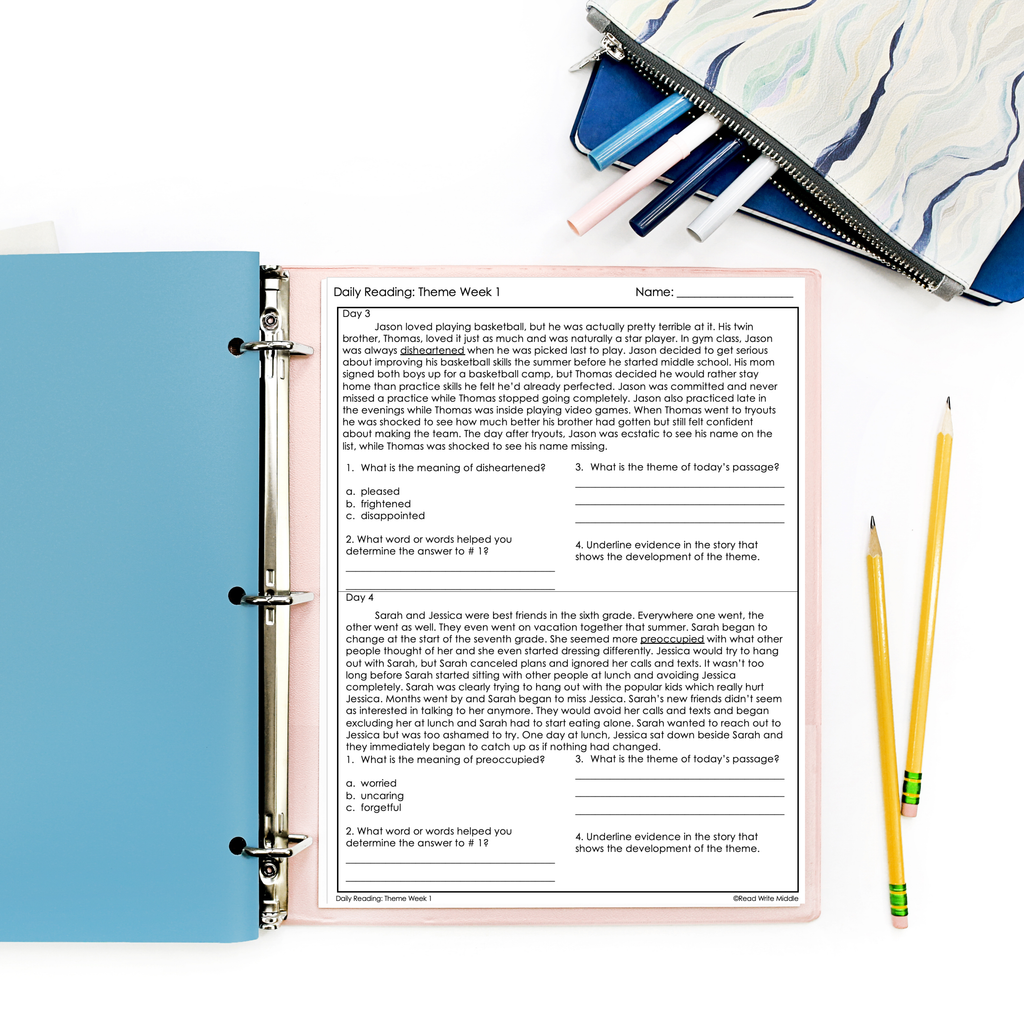
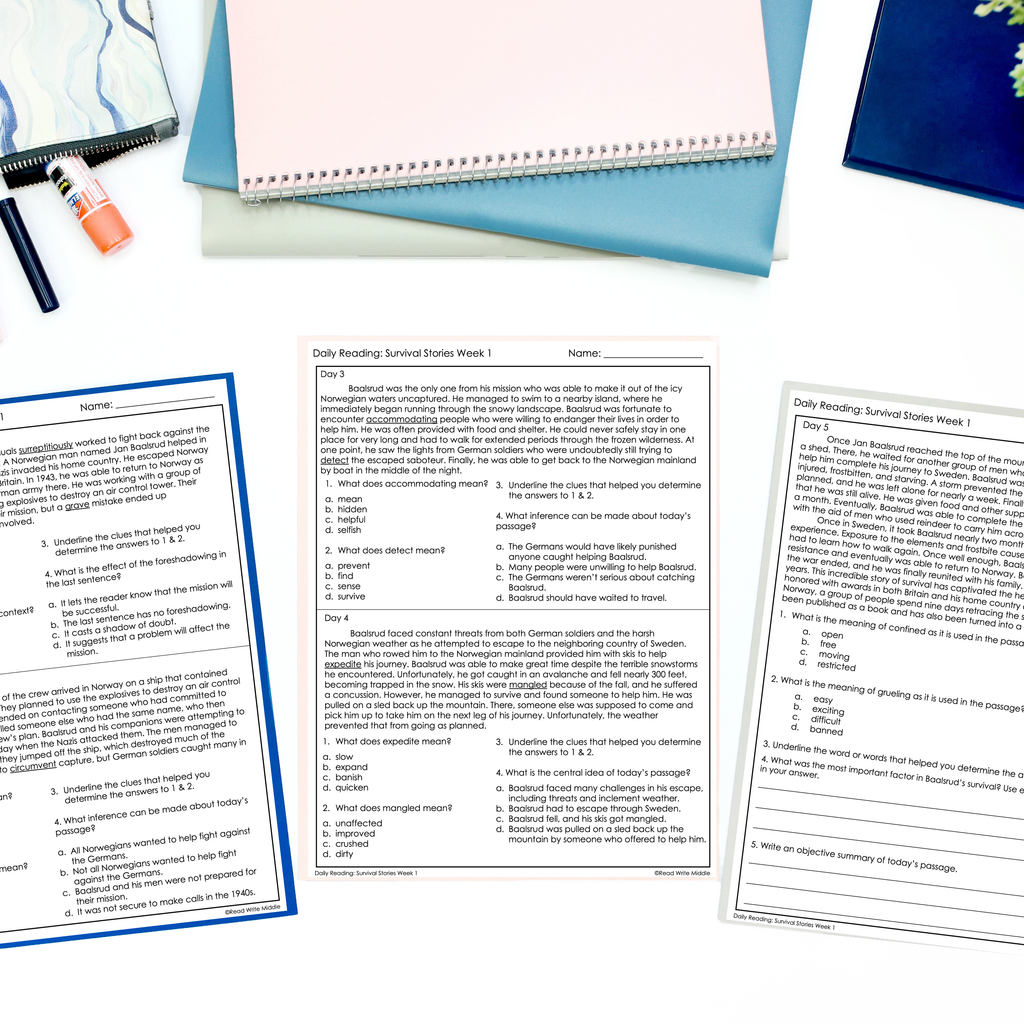
A reading bell ringer is a short reading activity students complete at the beginning of class. Typically, students read a brief passage and respond to one or more questions targeting a specific comprehension skill. Reading bell ringers can provide practice with skills such as:
- context clues and vocabulary
- making inferences
- identifying main idea
- determining theme
- citing text evidence
- analyzing details in a text
A five-minute reading passage isn’t a substitute for sustained reading or explicit literacy instruction. But it can give students another opportunity to apply skills you’ve already taught and is great for test prep!
How long should a reading bell ringer take?
For most middle school classrooms, I would aim for about 10 minutes.
If a bell ringer regularly takes 20 minutes, it isn’t really a bell ringer anymore because it’s becoming a lesson.
Students should have enough time to read carefully and think about their responses, but the activity shouldn’t consume the instructional time you need for everything else.
One reason I like using the same basic format each day is that students don’t have to spend several minutes figuring out the directions. Once they know the routine, they can come in and get started.
What should students do during a reading bell ringer?
One simple routine is:
1. Read a short passage.
Students begin with a reasonable amount of text they can read independently.
2. Answer a few focused questions.
Rather than trying to assess everything at once, questions can focus students’ attention on particular comprehension skills.
3. Return to the text.
Students should be able to use information from the passage to support their thinking rather than treating reading comprehension like a guessing game.
4. Briefly review when appropriate.
You don’t have to turn every bell ringer into a lengthy discussion. Sometimes a quick review of one particularly useful question is enough.
What reading skills work well for daily practice?
Reading bell ringers work particularly well for skills students need to apply repeatedly across different texts.
Context clues and vocabulary
Students encounter unfamiliar words constantly, both in ELA and in their other classes.
Short passages give students opportunities to consider how a word is being used in context and combine that with what they know about language.
This is also a natural place to incorporate morphology. If students recognize a familiar prefix, suffix, or root in an unfamiliar word, they can combine that information with clues from the surrounding text to make a stronger inference about the word’s meaning.
Inference
Inference is especially well suited to short reading practice because students can focus on the relationship between what the text says explicitly and conclusions they can make.
I like questions that require students to return to a specific detail rather than simply asking them to make an unsupported guess.
Main idea
Short informational passages can give students repeated practice determining the main idea of a text.
This can also lead to useful conversations about why several answer choices may be true while only one best represents the main idea.
Text evidence
Students need repeated opportunities to answer a question and then ask themselves:
What in the text supports my answer?
That habit extends far beyond a bell ringer.
Should middle school students do reading bell ringers every day?
They can, but daily doesn’t have to mean identical. The benefit of a daily routine is consistency. Students know what to do when they enter the classroom, and teachers don’t have to invent a new opening activity every morning. The reading itself can vary by topic, genre, length, and skill.
And some days, you may have a better reason to begin class differently. A routine should make your life and lessons easier, not become a rule you feel obligated to follow regardless of what your students need.
Are short reading passages enough to improve reading comprehension?
Short reading passages can provide useful comprehension practice, but they should not be the entirety of a student’s reading instruction.
Students also need opportunities to read longer and more complex texts, build knowledge, develop vocabulary, discuss what they read, write about texts, and simply spend meaningful time reading.
A reading bell ringer is a tool, not a reading curriculum. Its value comes from giving students frequent, manageable opportunities to practice important reading behaviors within a larger literacy-rich classroom.
How do you keep reading bell ringers from becoming busywork?
The easiest way for any daily activity to become busywork is for students to complete it every day without understanding why they’re doing it. A few things help:
Choose questions that require students to think about the text rather than simply locate an obvious answer.
Connect the skills to the reading work students are doing elsewhere.
Ask students occasionally to explain how they know an answer.
Discuss interesting vocabulary or language when it appears.
A simple 10-minute middle school ELA warm-up routine
If I were setting up a daily reading routine in a middle school classroom, I’d keep it extremely simple:
Minutes 0–1: Students enter, get materials, and begin.
Minutes 1–6: Students independently read the passage and answer the questions.
Minutes 6–9: Read the passage aloud or ask for volunteers for fluency practice.
Minute 10: Transition into the day’s lesson.
Once students understand the routine, you don’t need to reinvent the beginning of class every day.
Want the reading bell ringers already planned?
If you like this routine but don’t want to find a new passage and write new questions every morning, I created my Daily Reading Comprehension Passages specifically for consistent middle school reading practice.
The resource includes 30 weeks of short reading passages with comprehension practice covering skills including context clues, main idea, inference, theme, and text evidence. There are printable options as well as Google Forms, so you can use the format that works best for your classroom. The goal is simple: give students meaningful reading practice while making the beginning of class easier to manage.